
7 Proven Business Models to Monetize Your Marketplace
Your marketplace business model decides who pays and what they receive. Compare that value with the cost of providing it.
 Stripe
Your marketplace business model decides who pays and what they receive. Compare that value with the cost of providing it.
These seven models offer different starting points. My Unicorn Factory and Booknotes.ai examples describe the original approach at publication. They do not establish today's prices, policies, or revenue.
Commission
Charge a share of each completed transaction. This fits a marketplace that can track purchases and support both parties. A hypothetical $200 booking with a 10% commission produces $20 gross platform revenue. Subtract payment fees, support time, refunds, and acquisition costs before calling that profit.
Commission aligns revenue with transactions, but customers may arrange repeat work elsewhere. You also need clear responsibility for disputes and refunds.
Subscription
Charge a recurring fee for recurring value. That might include relevant opportunities, useful tools, or continuing support. Explain what subscribers receive each billing period. Access alone may not justify renewal if activity is low.
Track cancellations and renewals alongside revenue. A subscription creates ongoing delivery work rather than removing it.
Listing fees
Charge for publishing a listing or keeping it active for a stated period. This can suit job boards or specialized directories when listings reach the right people. Define the listing period, review process, and renewal terms.
Do not promise enquiries unless you can deliver them. Check expired and inaccurate listings so customers can trust the directory.
Freemium
Offer a useful free service with a paid upgrade. The upgrade needs a clear benefit customers can recognize. For example, a hypothetical directory could offer free profiles and paid reporting or additional support. Paid placement should explain its commercial basis.
The free service still costs money and time to operate. Measure how many suitable users upgrade before relying on it to fund the whole marketplace.
Lead generation fees
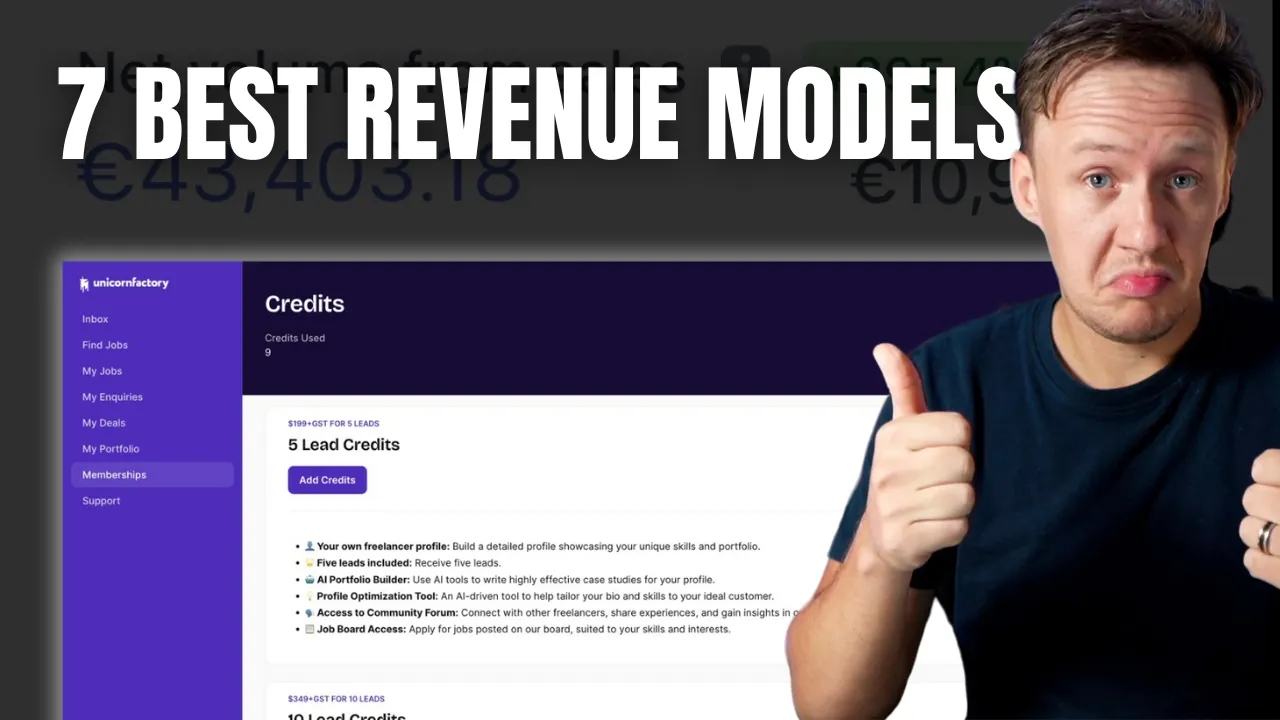
Charge for a defined introduction or qualified enquiry. In my original Unicorn Factory example, freelancers purchased credits for introductions to potential clients. That ties the fee to an opportunity rather than a confirmed sale.
Define a qualified enquiry using relevant service, budget, timing, and permission to contact. Explain whether several suppliers receive the same enquiry. Set replacement rules for invalid or duplicate enquiries. Track supplier outcomes so a high enquiry count does not hide poor quality.
Affiliate fees
A publisher earns a commission for qualifying referrals under a merchant's affiliate program. Amazon operates Amazon Associates; participating publishers receive eligible commissions. Amazon Associates explains its program and qualifying referrals.
My original Booknotes.ai example used Amazon links for listed books. A click or purchase does not always qualify. Check the actual program terms and disclose commercial relationships.
Sponsorship and display advertising use different agreements. Keep them separate from affiliate revenue in your forecasts. Affiliate links work best when the recommended product serves the reader's existing need.
Value-added services
Sell work beyond the basic marketplace connection. Examples include profile setup, matching support, marketing help, or content production. The original Townhouses.nz example combines property listings with rendering services for agents. Use it as a model category rather than a verified current offer.
Define scope, revisions, turnaround, and exclusions. Measure delivery hours before expanding the service. Service income can begin with a small audience, but your capacity limits how much work you can sell.
Compare fit and delivery costs
| Model | Fits when | Main cost or constraint |
|---|---|---|
| Commission | Transactions run through your platform | Payment handling and disputes |
| Subscription | Customers receive recurring value | Support and retention |
| Listing fee | A listing delivers clear value | Distribution and listing accuracy |
| Freemium | Paid upgrades solve a stronger need | Supporting free users |
| Lead fee | You can deliver qualified enquiries | Verification and replacement rules |
| Affiliate fee | Relevant products fit the reader's need | Qualifying referrals and changing terms |
| Value-added service | Customers need work beyond a listing | Delivery time and specialist skills |
For an illustrative $100 matching service, two hours at $35 per hour leave $30 before other expenses. Payment fees, refunds, acquisition, and software reduce that amount further. A recurring fee also needs a repeatable reason for customers to renew.
Start by testing marketplace pricing with one customer group. Once the offer works, plan marketplace payments with Stripe. Choose one model and measure its delivery before adding another.
Original video
Watch the original video on 7 Proven Business Models to Monetize Your Marketplace.
Keep learning
More guides, free videos and course access for existing members, all in one place.
Go to LearnRather have it built for you?
We'll match you with vetted agentic talent who build it with AI, inside the tools you already use.
Schedule a callRelated posts

Build Custom AI Agents for Other Businesses
Scope a custom business agent around one workflow, approved sources, read-only testing, and human review.

How to Use AI in Your Marketplace
Explore AI job drafts, support drafts, and marketplace recommendations, with human review and specific measures for assessing usefulness.
How to Use Stripe for Marketplace Payments
Stripe can collect your platform's own fees or support payments involving independent sellers. Those require different designs.