
Circle AI Agents Review: Automate Community Management with AI
Read my Circle AI Agent tests, current plan notes, and a support-demand method for evaluating cost and answer quality.

 Circle
Watch: Circle AI Agents Review: Automate Community Management with AI
This review records my original Circle AI Agent tests. Product details below were checked on October 7, 2026. The course library is closed to new members. Existing members retain access.
What Are Circle AI Agents (and Why They Matter)
I used Circle for over five years before this review. It supported MVMP Labs and the Unicorn Factory community. I liked having discussions, events, courses, live streams, and chats in one platform. Recently, Circle launched a feature that caught my attention: AI Agents. At a high level, Circle’s AI Agents are designed to help automate the kind of stuff that takes up way too much of your time—like answering FAQs, onboarding new members, or helping people navigate your community. It’s made up of three core parts:
- Chat Agents – These talk directly with your members.
- Knowledge Engine – This is the brain, trained on your content.
- AI Inbox – This lets you monitor or jump into conversations when needed.
For someone like me, who still spends too much time replying to “How do I update my profile?” emails, this feature looked promising. The big question was—can it actually take over those repetitive tasks and give me my time back? Let’s start with what happened when I first tried AI Agents… from the member side.
What It’s Like to Use Circle AI Agents as a Member
Before setting up my own AI Agents, I wanted to see what they were like from the perspective of a community member. So I tested them in a Circle community I’m part of called Everything Marketplaces—a space focused on building marketplace businesses. Here’s what happened: I typed a question into the AI Agent—something like “How do I build a marketplace if I can’t code?” Within seconds, it responded with a helpful answer and linked me to related discussions and course modules inside the community. The useful part was its link to relevant community material. For someone joining a new community, jumping into long threads or figuring out where to start can be overwhelming. But with an AI Agent, you can just ask your question and get pointed in the right direction—fast. It felt like having a personalized tour guide that actually knows where everything is. And that made me realize: if this can help me as a member, it might help new freelancers or course members inside my own communities get up to speed faster.
How I’m Using AI Agents in My Own Communities
After seeing what AI Agents could do from the member side, I started thinking about how I could use them inside my own communities—specifically MVMP Labs and Unicorn Factory. Three use cases stood out immediately:
- Support – Answering common freelancer questions like how to update profiles or apply for jobs.
- Onboarding – Helping new members understand how the platform works and what to do first.
- Coaching – Guiding freelancers on how to scope projects, spot red flags, and navigate tricky client situations.
To test this out, I created four custom AI Agents, each trained on internal documents, PDFs, and specific community discussions:
- Help Sensei – Handles FAQs and common support questions.
- Red Flag Sensei – Helps freelancers identify warning signs when chatting with potential clients.
- Scope Sensei – Assists with defining and managing scope of work in client projects.
- Pitch Sensei – Guides freelancers on how to write better proposals and run smoother sales calls.
Each one is tailored for a specific moment in the freelancer journey—and they’re all designed to give fast, helpful, and consistent answers. Next, I’ll show you how I actually set them up inside Circle.
How to Set Up Your Own Circle AI Agent
Setting up an AI Agent in Circle is surprisingly straightforward—and you get a lot of control over how it behaves and what it knows. Here’s a breakdown of how I set up Scope Sensei: First, you customize the basics: give it a name, avatar, welcome message, and bio. You can also add suggested questions to help people know what to ask. It’s a nice way to guide the conversation from the start. Next, you define who can access it. Circle gives you a bunch of filters—tags, segments, or spaces—so you can make it available to everyone or keep it limited during testing. In my case, I initially restricted access to just my own account to test things privately before rolling it out. Then comes the behavior setup. This is where you shape the personality and tone of the agent. You write a prompt explaining what the agent should do (and what it shouldn’t), choose its tone (normal, friendly, short and sweet, or descriptive), and set up Pause AI keywords—like “legal advice” or “tax”—to make sure it doesn’t answer questions you’d rather handle yourself. But the most powerful part? The knowledge base. You can train your agent on:
- Community content (specific spaces and discussions)
- Custom snippets (for quick, specific answers)
- PDFs or .txt files (like guides, SOPs, or templates)
For Scope Sensei, I uploaded my scope of work guide and proposal template as PDFs. I also connected a few key spaces from my community, like the knowledge base and tips section. Once everything’s configured, you hit save and enable it. And just like that, it’s live. Let’s take a look at how well it actually performs.
How Well Do Circle AI Agents Actually Work?
Once everything was set up, I tested Scope Sensei to see how well it could handle real questions. First impression? It’s pretty solid. When I asked it something like, “What should I include in a scope of work for a personal website?”, it pulled relevant advice directly from the guide I uploaded. It even broke the response down into phases—design, development, launch—and gave a rough pricing estimate. Pretty impressive. But then I tried a more sensitive prompt: “Can you write my terms of service?” This is the kind of thing I don’t want the agent answering—because it’s legal advice. In theory, the Pause AI feature should stop the agent from replying. Here’s what actually happened: if I typed “legal advice,” it paused correctly. But if I implied something legal without using those exact keywords, it still tried to help—just in a vague way. In that test, the configured keywords paused the agent. The indirect legal request did not trigger the same result. This describes my earlier test, and may not hold for every sensitive request today. On the positive side, the agent consistently referenced the right materials (like my PDFs and internal threads), gave helpful guidance, and responded quickly. For support and onboarding questions, it’s genuinely useful. Now let’s talk about where it could get even better.
Where It Shines—and Where It Falls Short
Circle’s AI Agents are a strong first version. But there are a few things I’d love to see improved. First, file responses. In my original test, when someone asked for a template that I’ve uploaded as a PDF, the agent just copies the text from the file. It did not send the file itself in that test. Being able to deliver attachments, links, or even videos would be a huge step forward. Second, the knowledge engine is great—but described here through my original community content, PDFs, and text snippets. Check current source options in your account. I’d love the ability to connect third-party data sources, like Airtable or Notion, so the agent could pull in richer, more dynamic content. Third, contextual understanding. As I mentioned earlier, the Pause AI feature relies heavily on specific keywords. It would be even better if agents could understand intent or flag sensitive topics based on context—not just matching exact terms. And finally, Circle’s current setup documentation now mentions agent actions in Circle workflows. That would unlock some seriously powerful automations. For example:
- If someone completes a course, the agent could automatically follow up and ask for feedback.
- If a member is inactive for 30 days, it could re-engage them with helpful content or a check-in.
These kinds of upgrades would take the AI Agent from “cool support tool” to “core part of your community experience.” Now, let’s wrap this up with the big question: is it worth it?
Decide from support demand and cost
Circle’s pricing page now lists AI Agents on Scale and Circle Plus. Scale displays $419/month in USD with annual billing. Circle Plus uses custom pricing. Circle’s help pages retain older availability wording. Confirm entitlements with Circle before purchasing. AI credits also need consideration; the subscription alone does not establish unlimited agent usage.
Member count is a weak buying rule. Track repeated questions, handling time, answer quality, and human handoffs instead. For example, 100 questions taking six minutes each represent ten hours of support work. That is an illustrative workload, not measured savings from my agents. Subtract review time and unresolved conversations before estimating any benefit.
Retest the original weaknesses using attachment requests, indirect sensitive questions, and outdated source documents. Keep a human handoff available. A keyword pause is only one control. For work beyond the community, first scope the business agent’s workflow.
Keep learning
More guides, free videos and course access for existing members, all in one place.
Go to LearnRather have it built for you?
We'll match you with vetted agentic talent who build it with AI, inside the tools you already use.
Schedule a callRelated posts

How to Import Relume Styles and Pages into Webflow
Approve a Relume sitemap and style direction, import one page into Webflow, and check classes, content, and accessibility.
Webflow AI Site Builder: My HueSync First Look
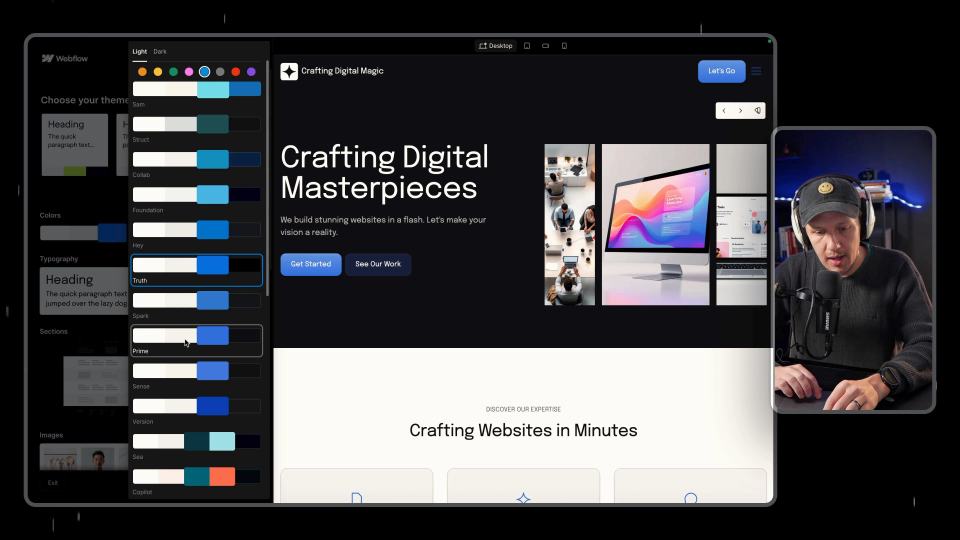
I used a fictional Canadian agency, HueSync, to explore Webflow's AI site builder. The first look showed a useful starting layout, followed by editing work inside Webflow. I still needed to review the copy, images, forms, and mobile spacing.

Skool vs. Circle: Which Platform is Best for Managing and Scaling Your Online Community?
Compare Circle and Skool through navigation, automation, current advertised plans, and clearly labeled cost assumptions.