
Your First Directory: Start with a Small Airtable Base
A simple restaurant directory helped illustrate how an Airtable base can become a useful first directory. Start with a small set of records you can check yourself.

 Airtable
A simple restaurant directory helped illustrate how an Airtable base can become a useful first directory. Start with a small set of records you can check yourself.
Build the base before the website
For an illustrative restaurant base, use Name, City, Category, Website, Source URL, and Last Checked fields. Add opening hours only when you can keep them current. Use a persistent identifier for each record so later updates do not create duplicate listings.
Choose one useful filter, such as neighborhood or cuisine. Check ten listings for accuracy before expanding the dataset. Do not put private contact details or unapproved personal information into a public shared view.
The original chapters cover the directory at 01:52, building at 04:50, and people/privacy at 08:37. A recorded challenge begins at 09:22. That challenge and its coaching prize are historical, not a current offer.
If you need a tighter topic, choose a directory niche. Then plan your first directory build around the records and filters you can maintain.
Keep learning
More guides, free videos and course access for existing members, all in one place.
Go to LearnRather have it built for you?
We'll match you with vetted agentic talent who build it with AI, inside the tools you already use.
Schedule a callRelated posts

Build Custom AI Agents for Other Businesses
Scope a custom business agent around one workflow, approved sources, read-only testing, and human review.
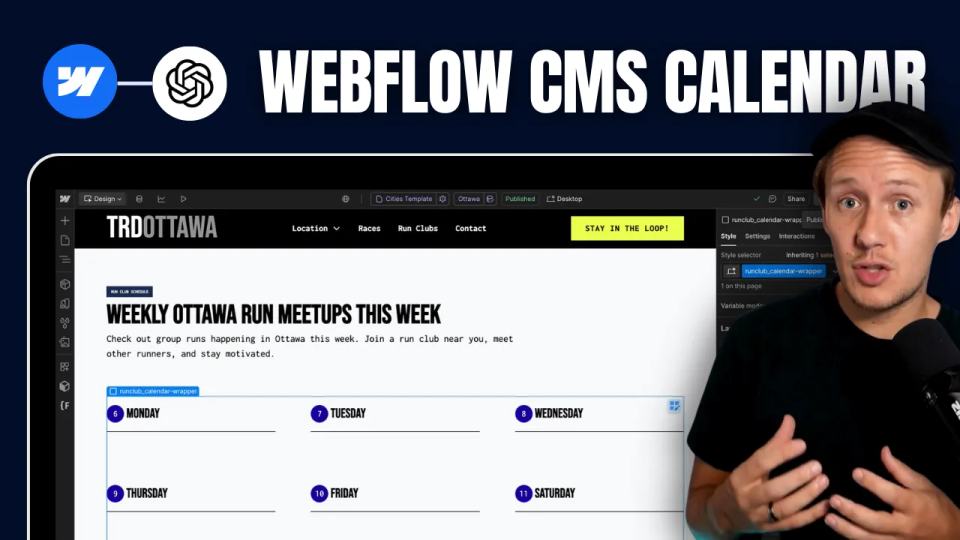
How to Build Custom Webflow CMS Features with ChatGPT & AI
I built a weekly calendar for The Running Directory Canada using Webflow CMS content and ChatGPT-assisted JavaScript. The calendar grouped run-club events by weekday and moved today's day to the front.

How to Map Common Airtable Fields to Webflow CMS
Map Airtable values to Webflow CMS types using option IDs, image objects, deterministic rich text, and staged JSON examples.